
Ururangi:
We feature the work of James Turanga from Te Rūnanga o Kirikiriroa to reflect the meaning of Ururangi, the star connected to atmospheric conditions, the winds, and the sky. Just as winds can be fierce or gentle, Ururangi teaches us resilience and symbolises adapting to change, navigating through challenges, and finding the inner strength to recover and move forward.
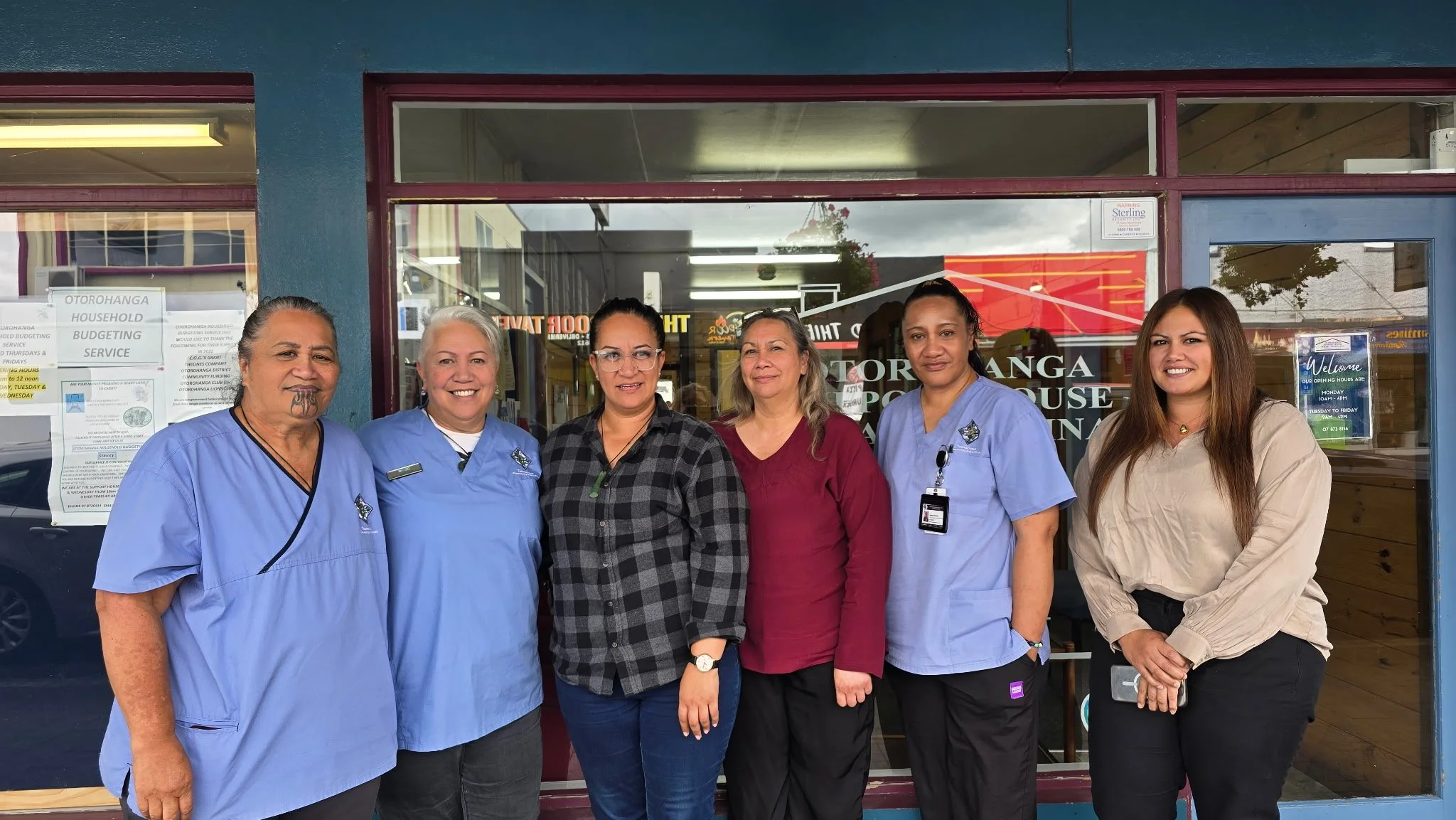
Team members of the Ōtorohanga Support House Whare Awhina (OSHWA) and the Taumarunui Community Kokiri Trust providing frontline support to whanau in need.
Resilience is often tested most clearly in times of disruption, and recent reflections from James Turanga, Health and Safety Advisor at Te Rūnanga o Kirikiriroa, highlight this through his experience supporting frontline providers during the Ōtorohanga Civil Defence weather event. Although every emergency unfolds differently, the experience offered valuable insight into what helps organisations respond effectively when severe weather affects communities. More importantly, it highlighted practical lessons that can be applied within the region to strengthen preparedness, build resilience, and support people well when it matters most.
One of the clearest lessons was the importance of communication. In a fast-moving emergency, timely and accurate information is essential. Frontline providers depended on strong communication networks to coordinate support, share updates, and respond to changing needs as conditions evolved. When usual systems are disrupted, having multiple communication channels, clear reporting lines, and current contact information can make a critical difference. Strong communication is not simply an operational tool; it is one of the foundations of organisational resilience.
The event also reinforced that resilient organisations are built around resilient people. Many responders were carrying out their professional responsibilities while also managing the impact of the weather event on their own homes, whānau, and communities. During prolonged emergencies, that pressure can quickly intensify. Supporting staff wellbeing, managing fatigue, and providing practical assistance to affected kaimahi are not secondary concerns, they are essential to sustaining an effective response over time.
Another critical element of resilience is the strength of community relationships. During the response, collaboration between Civil Defence, local authorities, iwi, marae, health providers, social service organisations, and volunteers helped ensure support reached those who needed it most. These partnerships are most effective when they are built before an emergency occurs. Investing in trusted relationships during normal operations creates a stronger platform for coordinated action when communities are under pressure.
The weather event also highlighted the need to identify and support those who may be most vulnerable during a crisis. For some whānau, flooding, road closures, and isolation created barriers to accessing food, transport, healthcare, and other essential services. Resilience depends not only on responding quickly, but on responding equitably. Knowing who may need additional support and having systems in place to check on their wellbeing can help ensure no one is left behind during an emergency.
Perhaps most importantly, the experience confirmed that preparedness is not a one-off task but an ongoing process. Emergency plans matter, but they are only as effective as the extent to which they are regularly reviewed, tested, and understood by staff. Training exercises, scenario planning, and emergency drills all help build confidence, clarify roles, and strengthen the ability to respond calmly and effectively when a real event occurs.
As severe weather events become more frequent across Aotearoa, resilience must remain a shared priority. The lessons from real-world responses show that preparedness is about more than plans on paper, it is about strong communication, supported staff, trusted partnerships, and a clear commitment to protecting the wellbeing of our communities. By continuing to strengthen these areas within our own region, we can improve our ability to respond effectively and remain steady, connected, and capable when our communities need us most.

James Turanga
Health and Safety Advisor at Te Rūnanga o Kirikiriroa. With a background in youth work and psychology, James’ career has been centered around supporting and empowering people. Over time, this passion naturally evolved into Health and Safety, where he could continue to focus on the wellbeing of others in a different way. As the Health and Safety Coordinator, he works alongside teams to help create a safe, healthy, and supportive environment for all kaimahi (staff).