
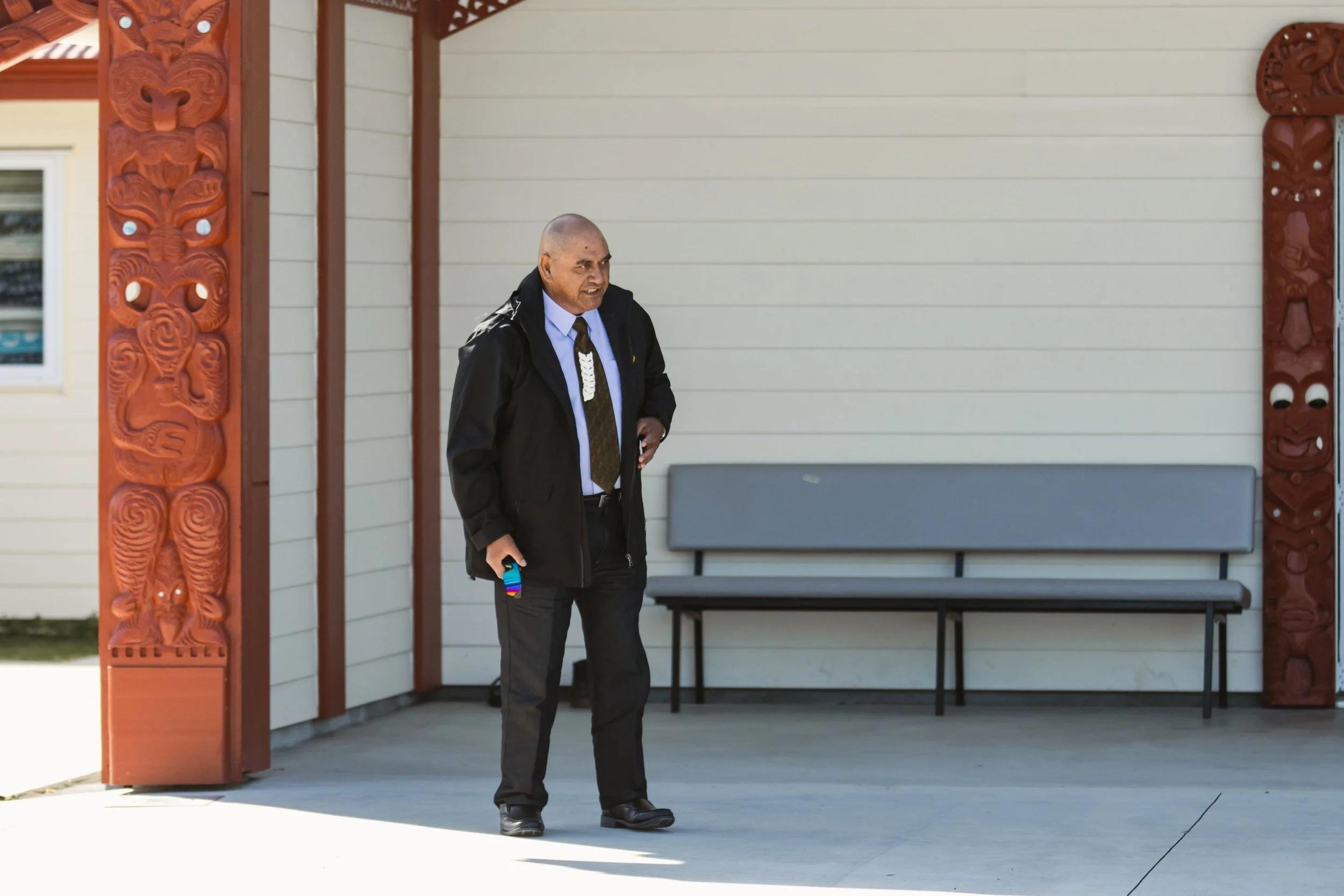
Gary Thompson
A powerful message can be delivered in many different ways. It may come through the impassioned speech of a charismatic political or religious leader speaking to an audience eager for inspiration. It may also be expressed through a thoughtful Professor or lecturer sharing knowledge with master’s students hungry to learn. In every case, the effectiveness of the message depends not only on the speaker, but on the attentiveness and engagement of the audience. A focused audience amplifies the impact of any kōrero and influences the actions that may follow.
The same is true for community and Māori development. Leadership in these spaces requires voices that are passionate, knowledgeable, inspirational, and experienced. Yet at times, the voice must be softer—carefully choosing words that avoid immediate offence or resistance when discussing topics such as Te Tiriti, equity, or Māori rights. Often, these messages are delivered to audiences who have limited understanding of the issues. In these moments, the quiet voice must use language that encourages curiosity, prompting people to return with questions and a willingness to explore the kaupapa more deeply.
This article highlights examples of this type of leadership through the work of the Kaiwhakarite and Te Toa Horopu o Matamata-Piako District Council (Māori Ward Councillor), Gary Thompson.
Te kete mātauranga – the personal basket of knowledge that guides practice
Gary has spent many years guiding and influencing change across national, regional, and district institutions, including government agencies and local councils. He is deeply grounded in Te Ao Māori, kaupapa Māori, and the tikanga and kawa of his Ngāti Pāoa and Ngāti Hauā people. These foundations shape the way he sees the world and affirm the spaces where strong kaupapa Māori leadership is most needed.
Growing up on the papakāinga and the marae, surrounded by five generations of whānau, gave Gary a spiritual and cultural grounding that has remained with him throughout his life. His early career—an apprenticeship followed by 26 years in the construction industry—provided the practical lessons and resilience that shaped his approach to people, challenges, and leadership.
A long career in Māori health followed. Here, the stark inequities between the health of Māori and other populations were both confronting and painful. For Gary, this space urgently called for leadership—a voice that could influence, advocate, and guide change.
During these years, he also served 12 years in iwi governance, contributing to Treaty negotiations and the settlement process. Working alongside Ministers, government agencies, and local authorities provided him with insight into the shifting and sometimes complex platforms of power.
Early mentors in the health sector encouraged him to pursue academic study, believing it would strengthen the work he was destined to do. In hindsight, Gary says that completing a Master of Management in Business Development, while valuable, feels less significant than the life lessons learned on the papakāinga, in marae spaces, within iwi governance, and on construction sites across the country.
Together, these experiences have filled his kete mātauranga — his personal basket of knowledge. Combined with the tikanga and values that guide his leadership practice, they form the tools he carries into every space where change is needed.
Māori Cancer Leadership & National Cancer Control Influence
After several years working within the Māori Health team at a District Health Board, Gary moved into the role of Inequalities Project Manager for the Northern Cancer Network. In this space, the inequities experienced by Māori and Pacific peoples were stark—unfair, unjust, and deeply entrenched. It quickly became clear that meaningful change could not be achieved solely at a regional level. The levers for cancer control sat within national policy settings and central government.
In response, Gary formed a small group of likeminded colleagues and embarked on a hikoi—a journey to seek endorsement and mandate for establishing a National Māori Cancer Leadership group that could advocate for whānau and hapū Māori at the highest levels. This effort led to the creation of Hei Āhuru Mōwai, Māori Cancer Leadership Aotearoa, which was launched in 2012.
Today, Hei Āhuru Mōwai stands alongside Te Aho o Te Kahu, the New Zealand Cancer Control Agency, where it is recognised as the Te Tiriti partner. The organisation contributes to national cancer strategy, helping shape and implement programmes that aim to improve outcomes for Māori. Regular governance-to-governance meetings ensure strong alignment and shared commitment to equity.
Hei Āhuru Mōwai has also formed strong relationships with Cancer NGO partners and academic institutions, including the University of Auckland. Through collaborations with the Cancer Society NZ and Gut Cancer NZ, they offer annual Master’s and PhD scholarships to support Māori doctors and researchers. After five years, the first Māori PhD recipient has submitted her thesis and is expected to graduate this year—an achievement that signals the long-term impact of sustained, values-led advocacy.
Gary reflects that this progress emerged from a quiet voice that persisted in spaces where terms like Te Tiriti and equity were once dismissed as irrelevant. Over seven years, that quiet voice eventually found open ears and willing hearts. The change that followed is part of the legacy of collective perseverance.
Yet, despite this progress, cancer outcomes for Māori and Pacific peoples have not improved. Much work remains, but Hei Āhuru Mōwai is now squarely positioned to influence the changes still required.
Influence in Local Government
A second example of quiet leadership can be seen in Gary’s work with local government. He joined the Mana Whenua Forum for the Matamata-Piako District Council in 2013. From experience, Gary understood the significant barriers Māori face when attempting to build on Māori land. For six years he consistently raised this issue with Council, advocating for policy settings that reflected the realities and aspirations of whānau and hapū.
Eventually, agreement was reached to initiate a Plan Change with the goal of enabling the development of papakāinga on Māori land. Again, a collective of iwi leaders came together to co-design the new policy. Their shared effort resulted in Plan Change 54, which became operative on 30 June 2024—a significant milestone for mana whenua and for future generations seeking to return home.
Marae development – influencing for better systems
Gary joined Community Waikato in 2014, to support their work to raise the capability and capacity of community organisations across the Waikato Tainui region. Gary quickly realised there was very little work being done to support Māori development where the marae was the central hub of whānau and hapū activities. Further, there was limited understanding as to how to support that sector of the community. There were several agencies, regional funders, philanthropic entities and iwi organisations doing isolated pieces of work to support marae development. Agencies noted that very few applications were being made by Māori organisations Again, working with a collaboration of the willing, Gary influenced and advocated for a more integrated approach. Programmes of work were piloted. Stakeholder roles were clarified and marae development plans were written. These plans enabled the funding and completion of major marae development capital works projects.
In 2020, Te Puni Kokiri released an Oranga Marae programme evaluation that reported, of the $37.25 million allocated across six regions between 2018 to 2020, the Waikato region secured $18.97 million or 49.9%. This equated to 74 funding application from Waikato Tainui region alone, more than double the application from the next 2 regions, Te Tairawhiti and Te Taitokerau.
This is the result of the influence that Gary’s quiet voice had in this systems change example.
Te reo marire – a quiet voice
The voice is indeed a powerful tool to influence positive changes for communities and members. Gary’s examples highlights that the voice doesn’t have to be loud, impassioned, or charismatic like that of a politician or priest from the pulpit. It proves that a quiet, persistent, confident voice can achieve significant change.