By: Tania Pointon, Seed Waikato
Throughout the Community Waikato Conference last November, there was a recurring theme in the room. Many of us were curious about how we transform the pattern of talking about “collaboration” into “collabor-action”. What would it look like to find meaningful opportunities to actually work on things together?
When Seed Waikato received funding from Len Reynolds Trust to bring The Wall Walk to Kirikiriroa, it felt like an opportunity to put that aspiration into practice.
There was also a practical reason: The Wall Walk is designed for groups of 60 or more people. That's a big ask for many smaller community organisations. Rather than Seed Waikato simply organising an event and selling tickets, we put the call out for a Co-Creation Team to bring this kaupapa to life together.
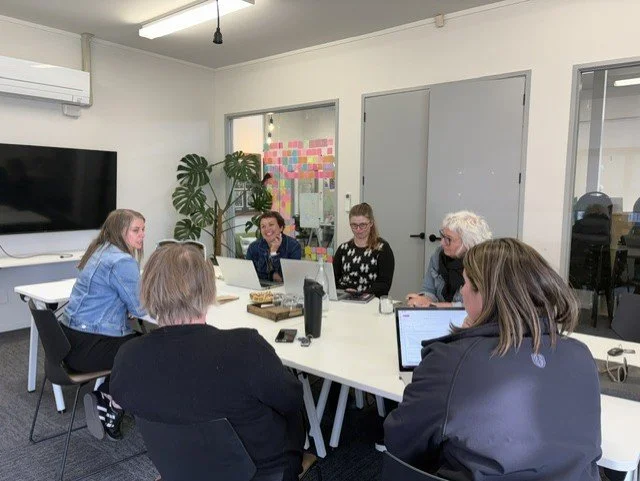
Our small but mighty team became Riika (YWCA), Karen (Community Waikato), Mel (Len Reynolds Trust), Jen (Interactionz), and Vera and Tania (Seed Waikato).
Doing our own work as Tangata Tiriti
We know many organisations want to begin or deepen their journey as tangata tiriti, but aren't always sure where to start.
The Wall Walk explores the history of Maaori-Crown relationships in Aotearoa and how that history continues to shape our systems and communities today.
Early in our first hui, we talked about who this learning experience was for and who should carry responsibility for creating it.
We wanted to intentionally explore this from the perspective of tauiwi and those of us learning the ways of tangata tiriti. We didn't want to ask tangata whenua to once again carry the responsibility for teaching us our history, helping us process it, or working out what we should do differently because of it.
As tauiwi, this is part of our work.
Collabor-action is a journey
Our first hui didn't begin with spreadsheets, ticketing platforms or catering. We began with whakawhanaungatanga.
Who are we? What called each of us to this kaupapa? What strengths do we bring?
We wanted to embody the saying “This is important, so slow down.”
Across five monthly hui, we've had rich koorero about what participants might need before The Wall Walk, how we hold the experience on the day, and what happens after the experience.
Along the way, we've got to know one another more deeply and discovered each other's strengths. Different people have stepped forward at different times. We've shared networks, divided the workload, asked difficult questions, laughed, cried, learned and genuinely shown up for one another.
As Riika Anderson from YWCA Waikato puts it: “Successfully bringing Wall Walk to 16 community groups has been a team effort. Together we have shared the workload, supported one another, and ensured that no single person has carried the burden alone.”
It has also given us an opportunity to think about what we are modelling for rangatahi about leadership and working together.
Vera, one of the rangatahi on our Seed Waikato team, reflects: “Being able to observe from within has been a mana-enhancing experience for me. The team has made me feel valued and empowered me to share my ideas and engage in discussions. I have enjoyed the opportunity to listen and learn, and I’m grateful to have worked alongside such lovely local leaders.”
That reflection matters. If we want the next generation to lead differently, we need to create spaces where rangatahi don't just observe collaboration from the edges, but experience what it feels like to have their contribution genuinely valued.
Perhaps we're learning about kotahitanga and mahi tahi by actually practising - through the relational experience of working towards a common purpose.
That's what collaboration has come to mean for us: coming together regularly, building deeper relationships, discovering what each can contribute, and taking action around something we collectively care about.
More than attending Te Tiriti training
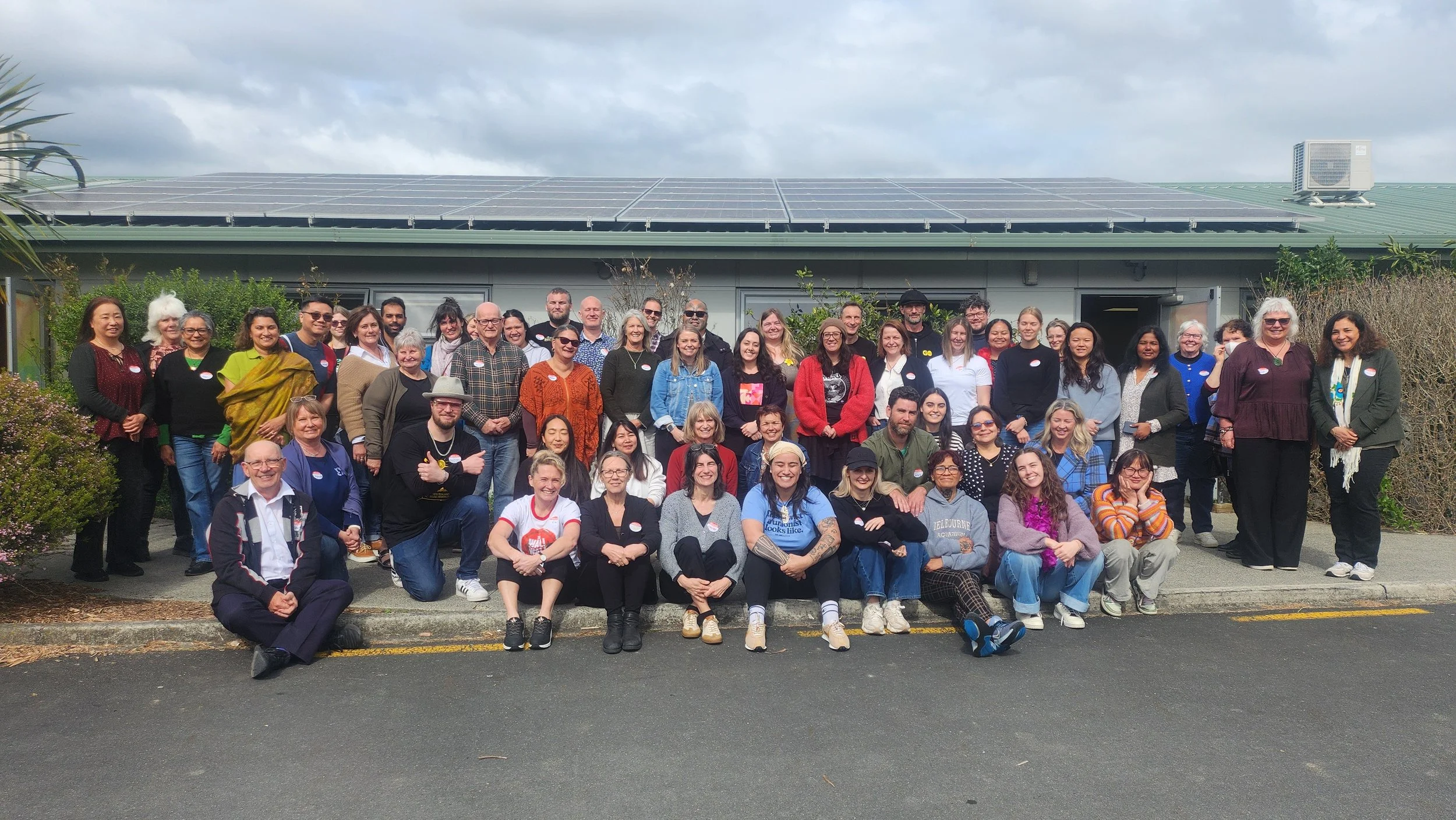
Sixteen community organisations will participate in The Wall Walk journey on 28 August.
We've deliberately encouraged organisations to send groups rather than individuals — kaimahi, leaders, board members and volunteers — because it can be lonely being the only inspired person returning to an unchanged system.
When several people experience something together, they have others who heard what they heard, felt what they felt, and can continue asking questions together.
Mel Gibson from Len Reynolds Trust captures why this matters:
“There is something much more powerful about bringing people from across the Waikato into the same space to explore our shared history, have courageous conversations, and learn alongside one another.”
And The Wall Walk isn't the end. Participants will decide together what they want to carry forward — whether that's examining governance and decision-making, deepening relationships with mana whenua, strengthening their understanding of Te Tiriti, or questioning existing practices.
Maybe collaboration is an outcome too
We started collaborating because we wanted to bring The Wall Walk to Waikato and use this as an opportunity to action a shared project.
But the process of creating it together has become part of the learning itself.
For those of us learning the ways of tangata tiriti, understanding our history is about understanding the systems we've inherited, recognising our place and power within them, and becoming more conscious about what we choose to do next.
Maybe that's the opportunity sitting underneath the call for greater collaboration I heard last November.
We don't necessarily need another meeting to talk about collaborating.
Sometimes we need a purposeful piece of mahi to gather around.
We're learning kotahitanga isn't something we simply talk about. It's something we practise — and we're discovering what becomes possible when we choose to walk, learn and act together.