
By Karen Stockmann, Community Waikato Advisor
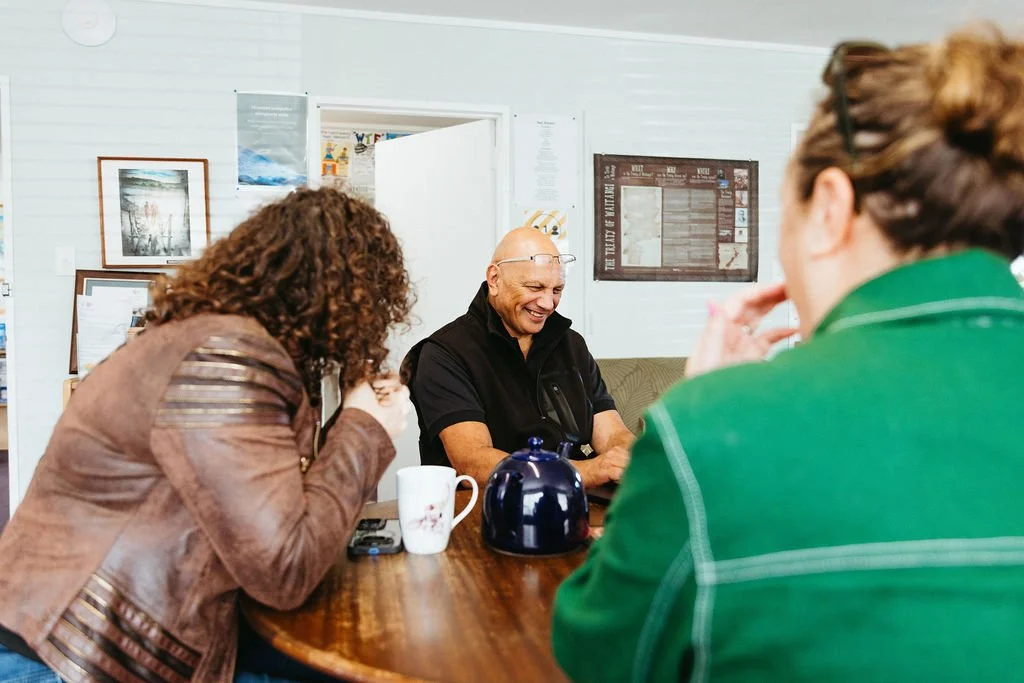
What might be possible together?
Working together can open up possibilities that may not be available to us on our own. Across the Waikato, we see community organisations, groups, hapuu, iwi and networks sharing knowledge, relationships, resources and ideas in all sorts of ways.
Sometimes this is a formal partnership. Sometimes it is a group of people around a table exploring a shared challenge. And sometimes it begins much more simply - with a conversation, a connection, or the recognition that we care about some of the same things.
As Community Waikato Advisors, we have the privilege of working alongside many of these conversations. We don't think there is one right way to collaborate. What works in one community or for one kaupapa may not work in another. What we do notice, though, are some conditions that can help people work well together.
Steven Moe and the team at Parry Field recently released Collaborate! How Charities can Advance their Purpose by Working Together. One of the useful ideas in their work is that collaboration can sit on a spectrum. It doesn't have to mean merging organisations or creating something new. It might mean sharing information, coordinating activity, sharing resources or services, developing something together, or forming a more formal partnership.
That resonates with what we see in our mahi. Collaboration can take many forms. The opportunity is to find the form that best serves the kaupapa, the people involved and the community.
So, rather than offering a recipe for collaboration, here are some questions and ideas that might help your conversations.
1. Start with what matters
Before getting too far into how you might work together, it can be useful to spend some time exploring why.
What matters to us?
What are we each hoping to see for our community or whaanau?
Where do our aspirations connect?
What might become possible together?
Starting here shifts the conversation from organisations and structures to shared purpose and possibility.
We have seen this when community groups and organisations have come together around a shared aspiration to encourage rangatahi participation in voting. Each brought different relationships, reach, ideas and ways of connecting with young people. The value wasn't in everyone doing the same thing, but in recognising a shared purpose and finding ways for their different strengths to contribute.
Funding can sometimes be the catalyst that brings people together, and that can be useful. It can also be worth asking: If this particular funding opportunity wasn't here, would there still be something we want to explore together?
There is no right answer. The question simply helps uncover what is really drawing people together.
Purpose was a strong thread through the recent Community Networks Aotearoa and New Zealand Council of Christian Social Services combined conference Connecting for Change too.
Across conversations about systems change, whaanau-led development, organisational culture and collective leadership, we heard the importance of keeping people, relationships and purpose at the centre.
2. Give relationships the time they need
We sometimes hear the phrase “collaboration moves at the speed of trust.” There is wisdom in that.
When people are enthusiastic about an idea, it can be tempting to move quickly to actions, funding applications, roles and structures. Taking some time for whakawhanaungatanga can create a much stronger foundation for whatever comes next.
This might involve being curious about each other:
Who are we?
What matters to us?
What strengths, knowledge and relationships do we each bring?
What is important for others to understand about us and our connection to this kaupapa?
What do we want to understand about each other?
These conversations are not separate from the work of collaboration. They are part of it.
3. Notice what is already here
Starting from a strengths-based approach asks us to look first at what is already present.
What knowledge already exists in the community?
What relationships are already strong?
What are organisations, groups and whaanau already doing well?
Who has particular skills, resources, experience or connections?
One organisation might bring trusted relationships with whaanau. Another may have specialist knowledge. Another might have a venue, administrative capability, communications expertise or useful connections.
A simple activity is to place your shared aspiration in the middle of a page and map what sits around it.
What do we each bring?
What is already happening that we can build on?
Where do our strengths complement each other?
What else might be possible if we connected these strengths?
This can help shift the conversation from “Who is going to own this?” towards “What could each of us contribute?”
4. Create space for open koorero
Strong relationships make it easier to talk openly about the practical things that come with working together.
That might include resources and funding, decision-making, responsibilities, workloads, communication, recognition and how differences will be worked through.
Rather than waiting until something becomes a problem, these can become questions to explore together:
What would a fair way of sharing the mahi look like?
How would we like to make decisions?
How will we notice if something isn't working—and how will we talk about it?
How do we make sure everyone's contribution is recognised?
There may not be immediate answers to all of these. What matters is creating an environment where the questions can be asked.
5. Let the structure serve the kaupapa
Not every collaboration needs a new organisation, governance group or legal structure.
Sometimes a regular hui and a commitment to good communication are enough.
Organisations might share training, resources or expertise. One organisation might hold funding for a collective project. Other collaborations may benefit from written agreements, shared governance or a more formal structure.
A useful question is: What is enough structure for what we are trying to do at this stage?
The words “at this stage” matter.
Collaboration can evolve. What works when three people first come together over a cup of tea may need to change as more people become involved, funding grows or responsibilities increase.
The structure can grow with the collaboration rather than having to be designed perfectly from the beginning.
The lifespan of a collaboration can vary too. Some are needed for a particular moment, opportunity or piece of mahi and naturally come to an end; others grow into long-term relationships. Finishing doesn't mean a collaboration has failed. Sometimes it simply means it has done what it came together to do.
6. Keep community at the centre
One of the messages we took from Connecting for Change was the importance of community-led and whaanau-led change.
When organisations collaborate, there is an opportunity to keep asking:
Who is this for?
Who already holds knowledge about this?
Whose aspirations are shaping the direction?
Who needs to be part of the conversation?
How might the people most connected to the kaupapa shape what happens next?
Community leadership may look different in different situations. Sometimes organisations lead. Sometimes we convene or connect. Sometimes our contribution is resources, advocacy or specialist knowledge. At other times, our role may be to create space for leadership that is already present within the community.
The question becomes less “How do we bring community into our project?” and more:
“How can we support what community wants to make possible?”
7. Value the connectors and hold leadership lightly
Every community has people who connect people. They notice common ground, know who is doing what, and make the introduction that leads to the next conversation.
Collaboration can also benefit from someone who can hold the space without needing to own the outcome. This is often part of our role as Community Waikato advisors—helping people hear each other, notice strengths, explore possibilities and find their own way forward.
At the same time, collaboration usually needs somewhere for momentum to sit. Someone needs to convene the next hui, follow up agreed actions or simply ask, “What did we say we would do next?”
We sometimes think of this as holding leadership lightly. It doesn't mean having no leadership. It means providing enough structure and energy to keep things moving, without one person or organisation needing to own the kaupapa. Leadership can shift as the collaboration develops and different strengths are needed.
Sometimes what holds a collaboration together is simply having a regular place to connect. We see this in The Waikato Community Transport Forum where people from community, local government and health come together to share what they are noticing, make connections and explore opportunities. The forum provides some continuity and momentum, while different people and organisations can contribute or lead depending on what is needed.
A useful question is: “What does this kaupapa need to keep moving, and who is best placed to provide that right now?”
8. Start where you are
Collaboration doesn't always begin with a strategic plan or a formal invitation.
It might begin with: “We should have a koorero.”
Someone makes a connection.
A few people get together and share what they are noticing.
Someone offers a space.
A group shares a resource rather than creating another one.
Two organisations realise they have complementary strengths.
An idea gets tried.
People learn together.
Trust grows.
And something that wasn't obvious at the beginning starts to emerge.
A conversation starter
If you are wondering whether there might be an opportunity to work with others, you don't necessarily need to know what the collaboration will look like.
You could simply begin with a few questions:
Purpose
What matters to us, and where do our aspirations connect?
People
Who else cares about this? Who needs to be part of the koorero?
Strengths
What is already here that we can build on?
Contribution
What could each of us bring?
Momentum
What will keep this moving and who is best placed to hold that right now?
What might become possible?
Perhaps one of the things we have learned through our advisory mahi is that collaboration is less about finding the perfect model and more about creating the conditions for people to work well together.
Structures can help. Agreements can help. Funding and good governance can help.
But relationships, trust, curiosity and shared purpose are what give those things life.
Across our communities there is already an enormous amount of knowledge, capability, generosity, creativity and connection. A strengths-based approach invites us to notice that first.
Rather than starting with “What are we missing?”, we might ask: “What do we already have between us?”
And then: “What might become possible if we connected it?”
Sometimes that is where collaboration begins.
Community Waikato's Advisors and Kaiwhakarite work alongside community organisations, hapuu, iwi, networks and collaborative initiatives across the Waikato - supporting people to build on their strengths, strengthen relationships and create the change they want to see in their communities.